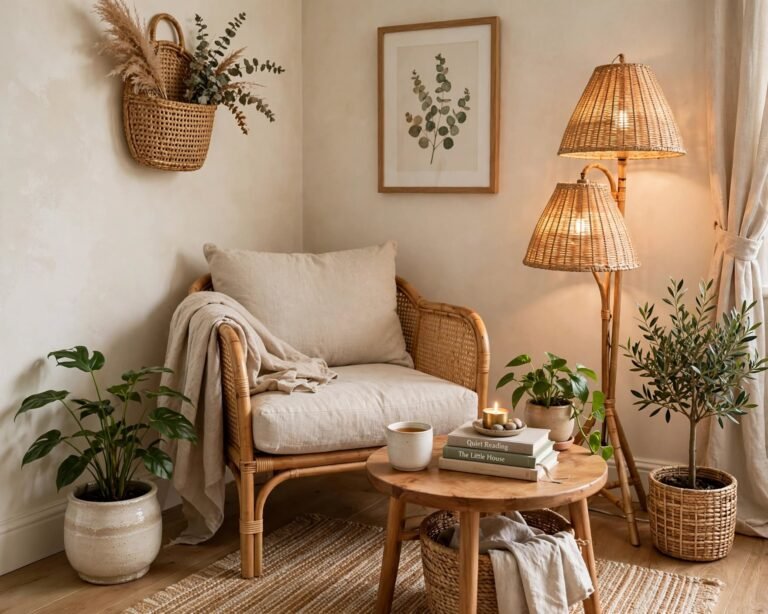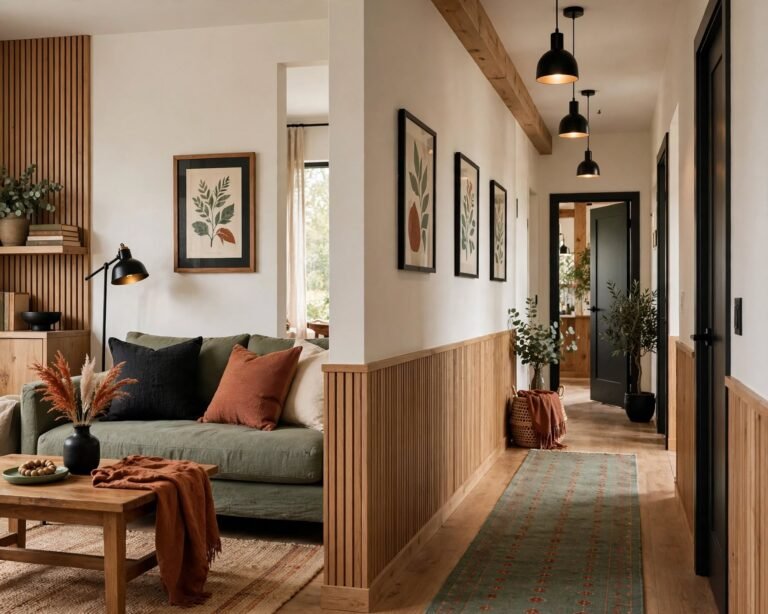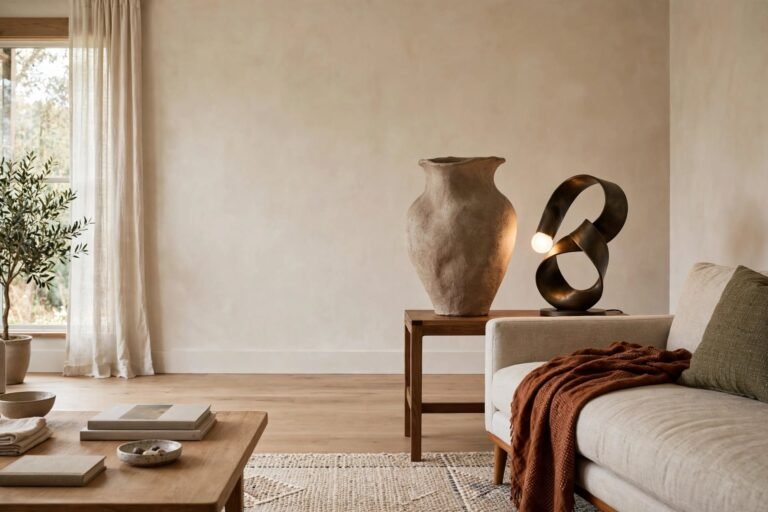
A home can feel personal without being filled with more things.
In fact, the rooms that often feel the most distinctive are not necessarily the ones with the most décor. They are the ones where color, artwork, lighting, texture, and meaningful objects have been chosen with enough intention that each piece has room to be noticed.
If your space feels a little plain but you are worried that adding more décor will make it cluttered, the goal is not to keep decorating until every surface is full. Instead, focus on a few strong choices that create character while leaving visual breathing room.
These home decor ideas can help you create a space that feels more expressive, collected, and finished without making it feel overly decorated.
1. Give the Room One Clear Focal Point
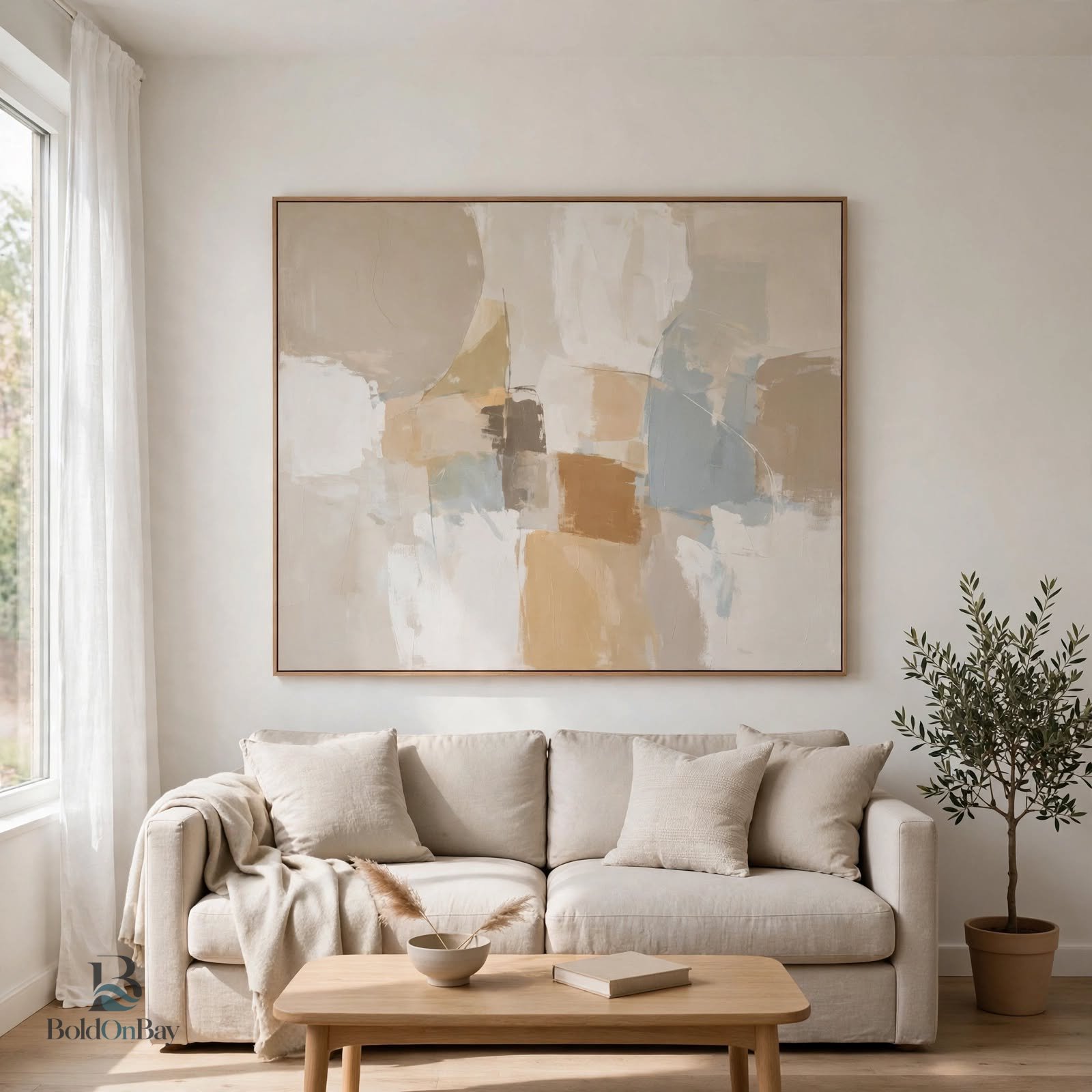
One of the easiest ways to add personality without adding clutter is to decide what you want people to notice first.
A focal point could be:
- a large piece of wall art
- an interesting light fixture
- a fireplace
- a colorful sofa
- a statement headboard
- a distinctive rug
- an architectural feature
When one element carries most of the visual weight, everything else can stay quieter.
For example, if you choose oversized artwork above the sofa, you may not need a gallery wall, multiple shelves, decorative signs, and several small framed prints in the same area.
Practical rule: Let one element lead and allow the surrounding décor to support it.
2. Use Larger Decor Instead of Many Small Pieces
A common reason a room starts to feel busy is not that it contains too much decoration overall. It is that it contains too many small items competing for attention.
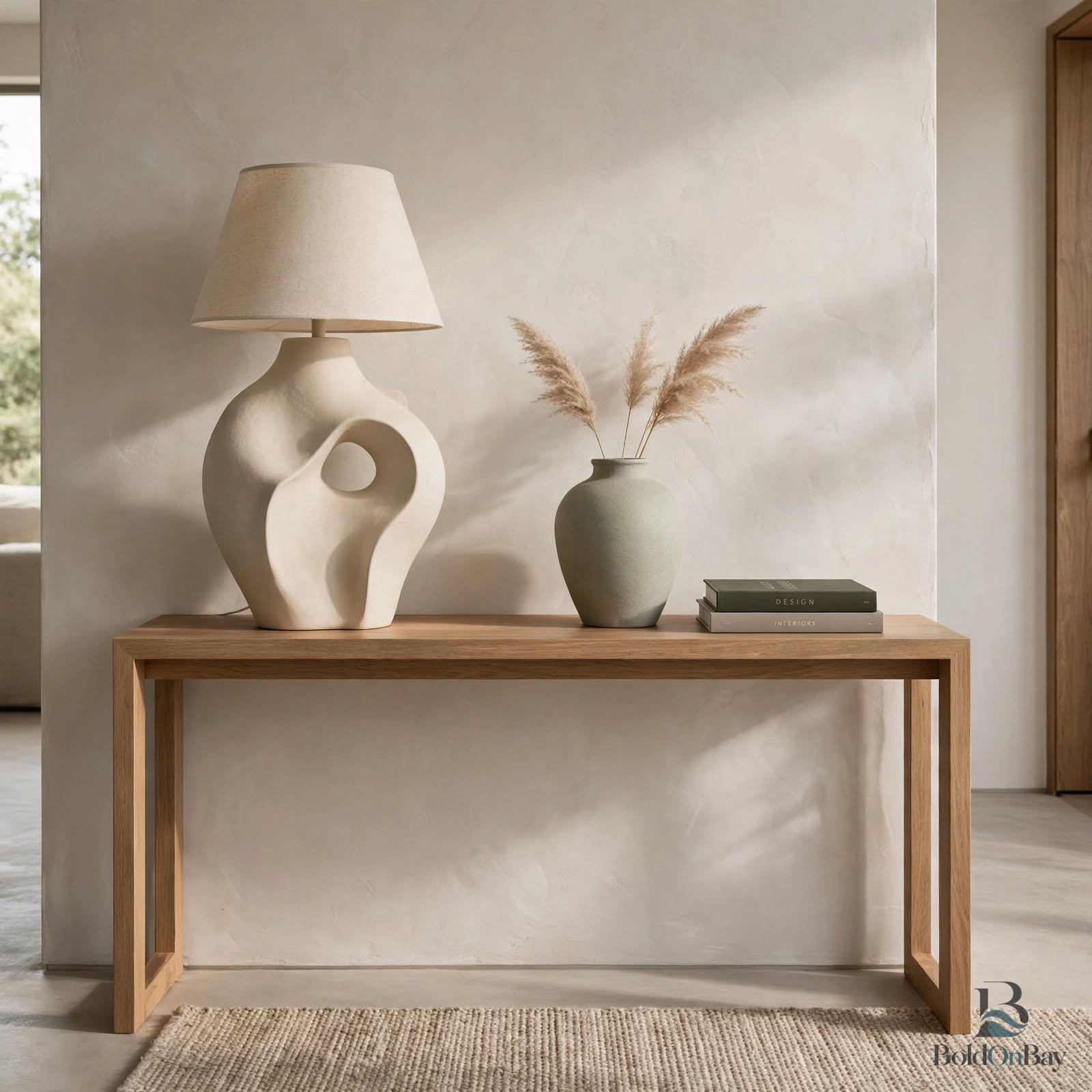
Instead of placing five or six small decorations on a console table, consider:
- one large lamp
- one medium decorative object
- a small stack of books
The same idea works on walls.
One substantial piece of artwork can sometimes make a room feel calmer and more finished than several unrelated small pieces.
Larger objects create stronger visual impact while reducing the number of separate things your eye has to process.
3. Introduce One Accent Color
You do not have to redesign the entire color scheme to make a neutral room more interesting.
Choose one accent color and repeat it in a few carefully selected places.
For example, a beige and cream room could use muted blue through:
- a pillow
- artwork
- a vase
- a throw blanket
The repeated color creates a visual connection between different parts of the room.
The key is repetition rather than quantity.
Three thoughtfully placed blue accents usually create more cohesion than ten unrelated colorful accessories.
4. Let Artwork Show More of Your Personality
Artwork is one of the most effective ways to make a home feel individual because it adds character without taking up floor or surface space.
Rather than choosing artwork only because it matches the sofa, look for pieces that reflect something about your taste.
That might mean:
- abstract shapes
- photography
- typography
- landscapes
- vintage-inspired prints
- graphic artwork
- handmade pieces
A useful question is:
Would I still like this artwork if it were hanging somewhere other than this room?
If the answer is yes, you are probably choosing something because you genuinely like it rather than simply using it to fill a blank wall.
5. Add Texture Before Adding More Objects
If a room feels flat, the solution is not always another decorative item.
Sometimes it needs texture.
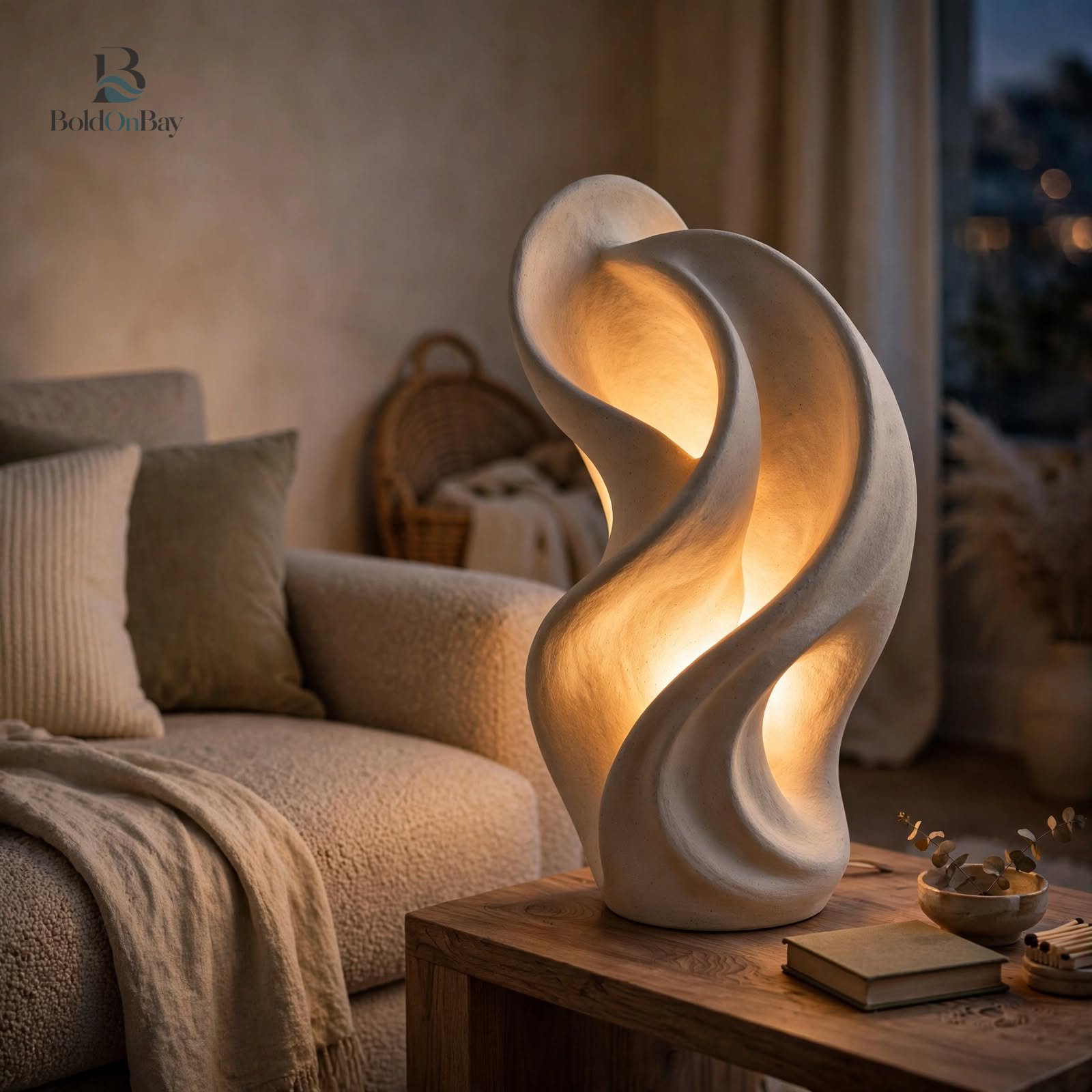
You can introduce texture through:
- linen
- woven baskets
- wool
- natural wood
- boucle
- ceramics
- stone
- rattan
- textured rugs
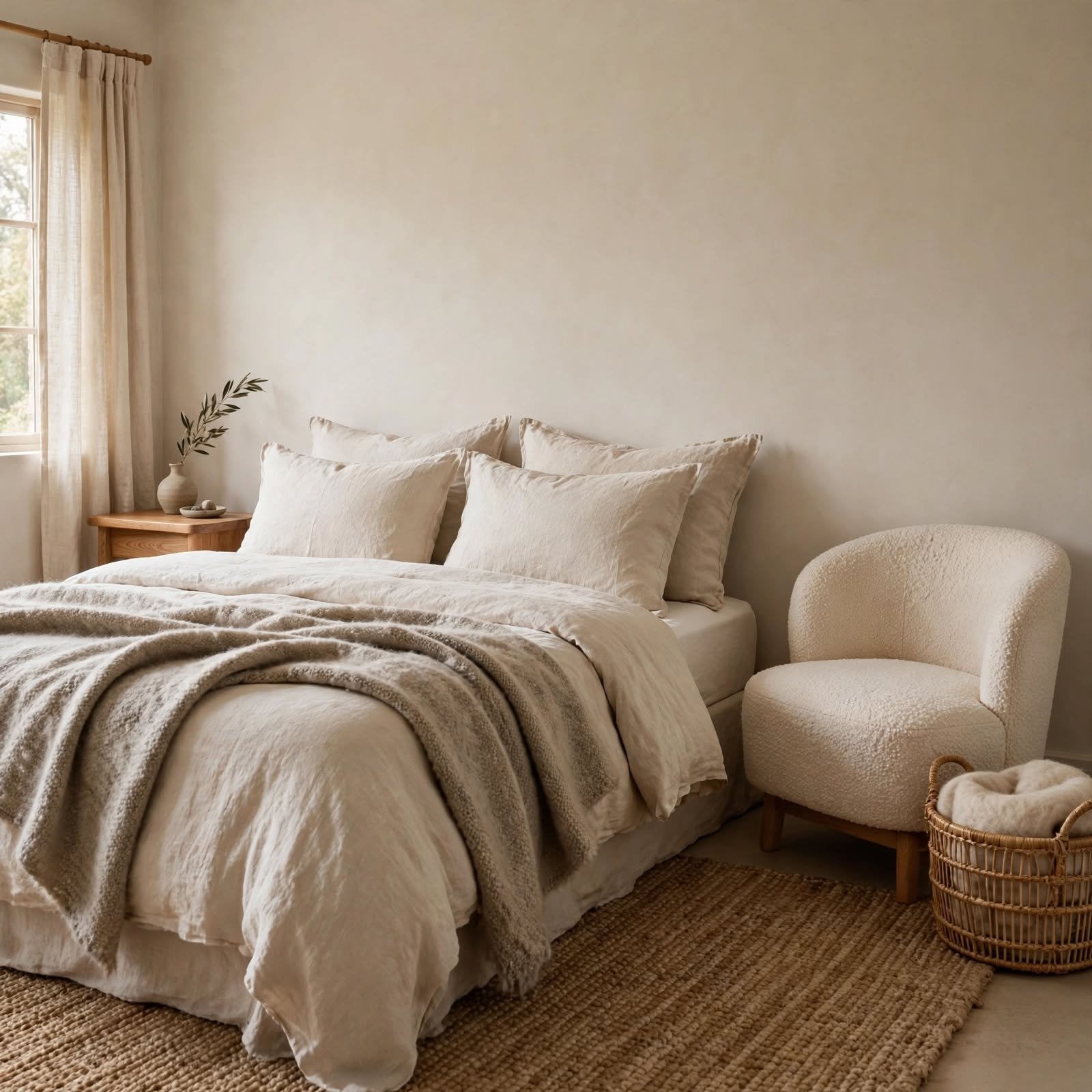
Imagine two neutral bedrooms.
One contains white walls, a white bed, white furniture, and smooth white bedding.
The other uses the same color palette but includes linen bedding, a wool throw, natural wood, a woven basket, and a textured rug.
The second room can feel much richer even though it does not contain more decoration.
Texture creates visual interest without necessarily creating visual clutter.
6. Use Lighting as Decoration
Lighting does more than make a room brighter.
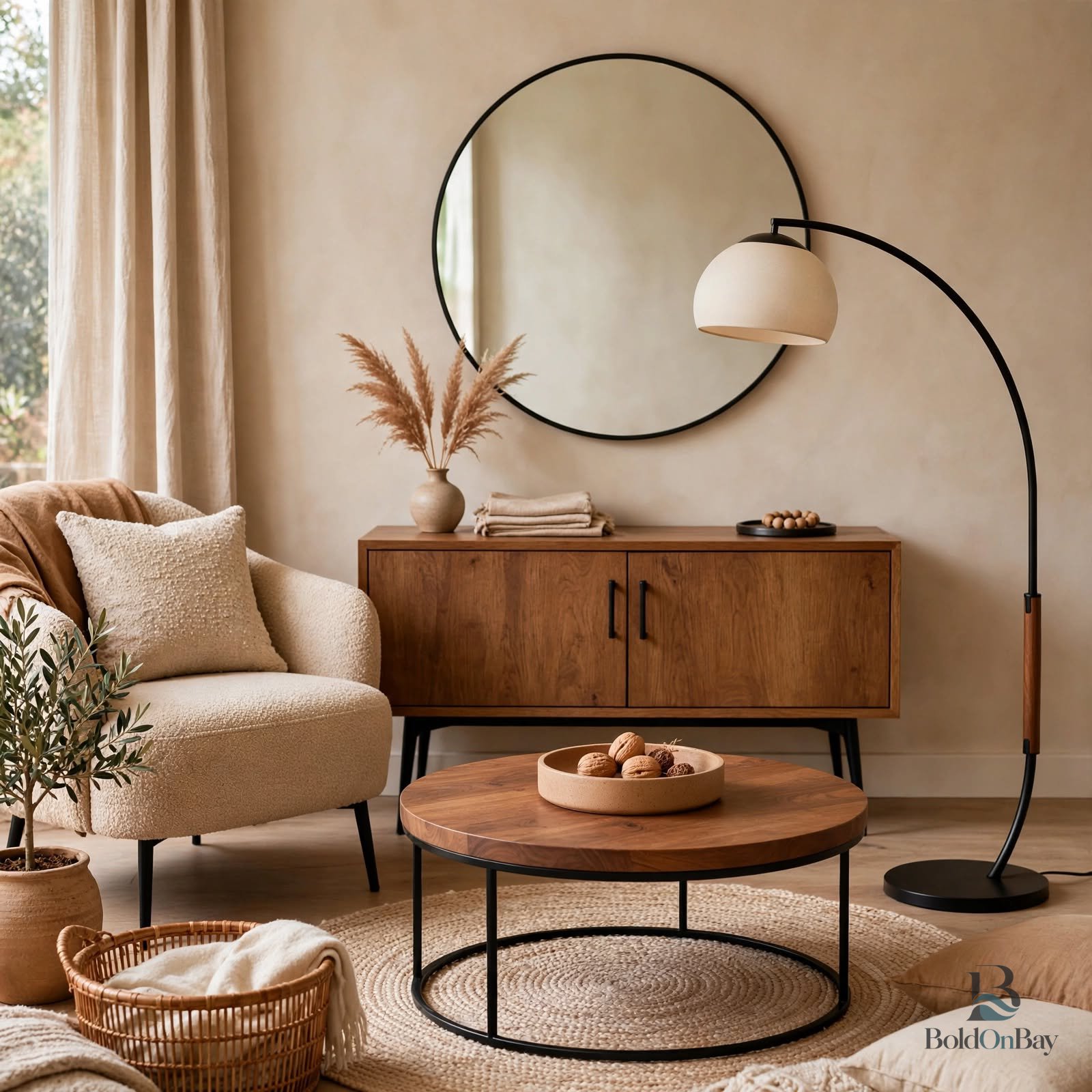
The shape, material, scale, and warmth of a lamp can become part of the room’s design.
Instead of adding another decorative object to a side table, consider letting the lamp become the decorative object.
Look at:
- sculptural table lamps
- oversized floor lamps
- pendant lighting
- wall sconces
- unusual lamp shades
Lighting can also change how the other elements in the room feel.
Soft, warm light can make wood, textiles, artwork, and neutral colors feel much more inviting than harsh overhead lighting alone.
7. Leave Some Walls Empty
An empty wall is not necessarily an unfinished wall.
Negative space gives the eye somewhere to rest.
If every wall contains artwork, shelves, mirrors, photographs, or decorative objects, none of those elements gets much visual attention.
Try decorating the walls that naturally matter most:
- above the bed
- behind the sofa
- over a console
- near the dining area
Then allow less important walls to remain simpler.
This contrast often makes the decorated areas feel more intentional.
8. Create Small Groups Instead of Spreading Decor Everywhere
When decorative objects are scattered evenly around a room, the whole room can start to look visually active.
Grouping items creates clearer visual zones.
For example, rather than placing one decorative object on every available surface, create one small arrangement on a console.
A simple group might include:
lamp + books + ceramic object
or:
vase + framed photo + bowl
The rest of the surface can remain open.
This approach helps a room feel styled without looking packed.
What Is the 3-5-7 Rule in Decorating?
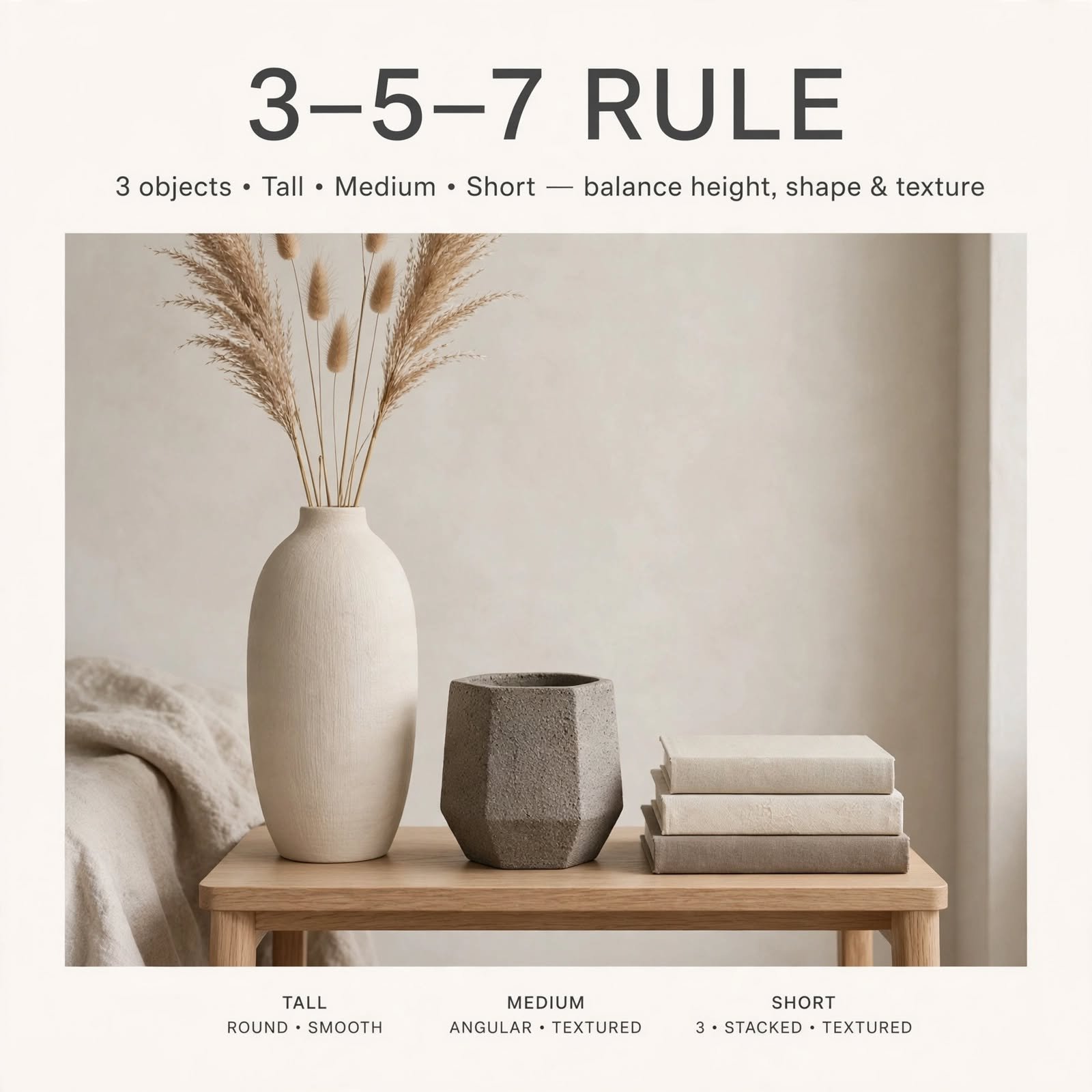
The 3-5-7 rule is commonly used as a loose styling principle for arranging objects in odd-numbered groups, because odd-numbered arrangements often feel more natural and visually interesting than perfectly symmetrical ones. It should be treated as a guideline rather than a strict decorating formula.
For example, you might arrange:
- 3 objects on a small side table
- 5 objects across a larger shelf
- several elements of different heights across a longer display
The more useful principle behind the rule is variation.
Try mixing:
- tall + medium + short
- round + angular
- smooth + textured
You do not need exactly three, five, or seven objects every time.
If three objects already look balanced, adding two more simply to satisfy a rule can make the space worse.
9. Mix Old and New Pieces
Rooms made entirely from recently purchased matching furniture can sometimes feel more like a showroom than a home.
Adding one or two objects with a different history or style can immediately create character.
Consider:
- a vintage mirror
- an inherited side table
- an old ceramic vase
- secondhand artwork
- antique books
- a handmade object
You do not need to decorate the entire room in a vintage style.
One older piece surrounded by modern furniture can often create more personality precisely because it is different.
10. Display Things That Mean Something to You
Personal décor does not need to mean putting dozens of family photographs on every surface.
A small number of meaningful objects can be more effective.
You might display:
- an object brought home from a trip
- a book you love
- something made by a family member
- a piece of art connected to a place
- a collected object
- a framed photograph
The goal is not to turn the room into a collection of memories.
It is simply to allow a few objects to tell people something about the person who lives there.
How Do You Add Personality to Your Home Decor?
The simplest way to add personality is to make a few decorating decisions based on what you genuinely like, rather than choosing everything because it matches.
Start with one or two elements that feel distinctive to you, such as artwork, color, lighting, a vintage piece, or an unusual textile. Then keep the surrounding elements quieter so those choices have room to stand out.
A useful way to think about it is:
Personality comes from selection, not accumulation.
Your home does not become more personal every time you add another object.
It becomes more personal when the objects you keep say something about your preferences.
11. Repeat Shapes or Materials Around the Room
Repetition is one of the easiest ways to make different objects feel connected.
For example, you could repeat:
- black metal
- warm wood
- rounded shapes
- brass
- ceramic
- natural fibers
Suppose you have a round coffee table.
You might subtly repeat that shape through:
- a round mirror
- a curved lamp
- a circular bowl
The items do not match, but the repeated shape creates visual continuity.
This makes a room feel collected rather than random.
12. Choose One Statement Piece Per Zone
Large rooms often contain several functional zones.
A living room, for example, might include:
- seating
- a reading corner
- a media area
- an entry section
Instead of putting bold décor everywhere, give each zone one main visual feature.
The seating area might have artwork.
The reading corner might have a distinctive floor lamp.
The entry might have an interesting mirror.
This creates personality throughout the room without allowing everything to compete simultaneously.
13. Treat Books as Part of the Decor
Books can add color, texture, height, and personality without looking like objects purchased purely for decoration.
Use books:
- on a coffee table
- on an open shelf
- beside a lamp
- underneath a decorative object
- on a nightstand
Choose books you actually enjoy or want to keep.
They work particularly well because they serve both a visual and practical purpose.
14. Use Mirrors Where They Have a Purpose
Mirrors can make rooms feel brighter and more open, but they are most effective when positioned intentionally.
Good locations often include:
- opposite or near a window
- above a console
- in an entryway
- behind a small dining area
- on a wall that needs visual depth
An interesting frame can also introduce personality.
The important part is not simply adding more mirrors. It is using one where it improves either the light, proportion, or visual structure of the room.
15. Edit the Room After You Decorate It
One of the most useful decorating steps happens after you think the room is finished.
Remove something.
Look around and ask:
- Is anything competing with the focal point?
- Are several objects doing the same job?
- Does every surface need decoration?
- Are there too many small objects?
- Is there somewhere for the eye to rest?
Sometimes the difference between a room that feels styled and one that feels cluttered is simply one vase, one pillow, or one piece of wall art too many.
Editing is part of decorating.
What Are Some Aesthetic Things You Can Add to a Room?
If a room needs more visual interest, start with elements that change its atmosphere without consuming much space.
Some useful options include:
| Addition | What It Can Add |
|---|---|
| Large artwork | Focal point and personality |
| Table or floor lamp | Warmth and sculptural interest |
| Textured throw | Softness and depth |
| Area rug | Color, pattern, and definition |
| Mirror | Light and visual space |
| Curtains | Height, softness, and color |
| Plants | Organic shape and natural texture |
| Books | Personality and layered styling |
| Decorative ceramics | Shape and handcrafted character |
| Accent pillow | Small, easily changed color or pattern |
You do not need all of them.
Choose what the room currently lacks.
A Simple Framework for Decorating Without Making a Room Feel Busy
Before buying more décor, look at the room in three layers.
Layer 1: Anchor
What is the main thing people notice?
Examples:
- sofa
- bed
- artwork
- rug
- dining table
Layer 2: Character
Choose two or three elements that give the room personality.
Examples:
- interesting artwork
- accent color
- unusual lighting
- vintage object
- patterned textile
Layer 3: Quiet Space
Identify what you deliberately will not decorate.
That might mean:
- one empty wall
- part of the coffee table
- a clear nightstand
- an open section of shelving
This third layer is easy to overlook, but it is what allows the first two layers to work.
A room needs both things to notice and places not demanding attention.
Can ChatGPT Help Decorate a Room?
AI tools can help with early-stage decorating decisions such as exploring color combinations, comparing layouts, generating style directions, or creating a shopping checklist. They work best as planning tools rather than substitutes for measurements, real lighting conditions, budget, and your own preferences.
For better results, provide information such as:
- room dimensions
- existing furniture
- photographs of the space
- colors you want to keep
- pieces you cannot replace
- budget
- how the room is used
The more real constraints you provide, the more useful the suggestions become.
And before buying furniture or large décor based on an AI visualization, always verify actual dimensions. Rendered images can make furniture and artwork appear larger or smaller than they really are.
The Most Personal Rooms Aren’t Usually the Busiest
Adding personality to your home does not require filling every wall, shelf, and surface.
A more reliable approach is to choose a few elements that communicate your taste clearly and then give them enough space to matter.
Start with a focal point. Add texture. Repeat a color or material. Include something meaningful. Use artwork and lighting deliberately. Then stop before every empty space has been filled.
The result can still feel expressive and distinctive — just without the visual noise.
For BoldOnBay, this idea can become an important principle:
A bold home doesn’t need more things. It needs stronger choices.
That is where personality and calm can exist in the same room.