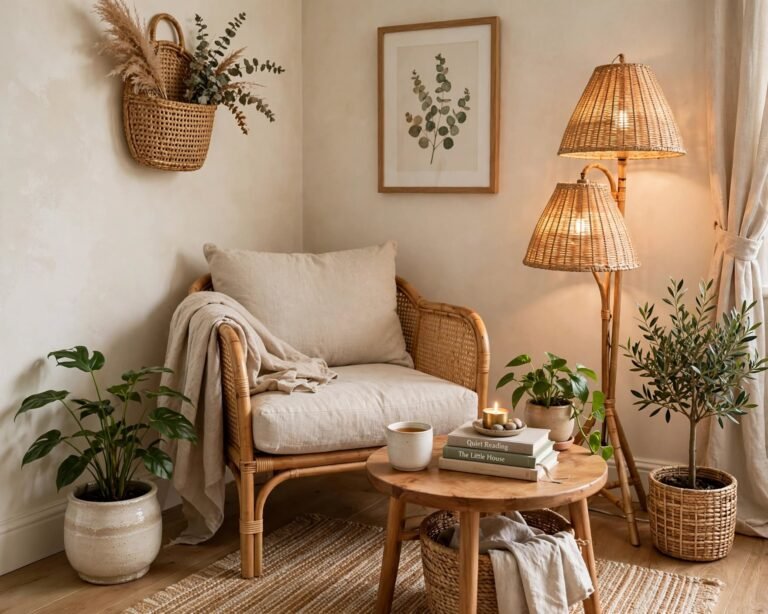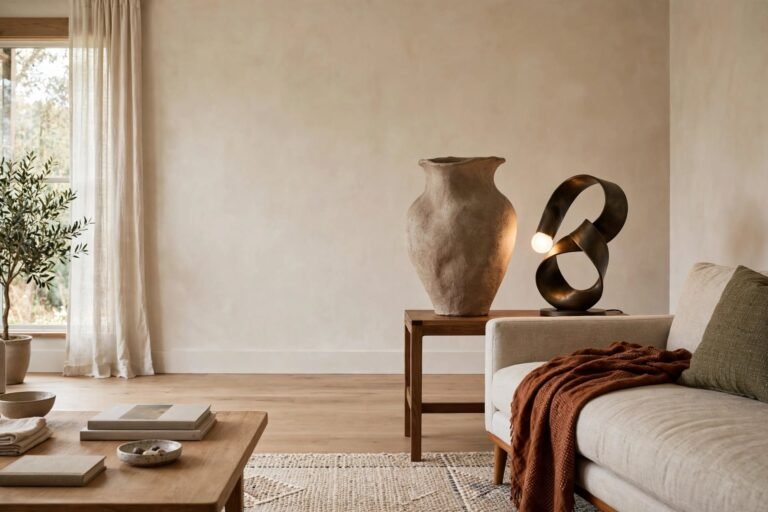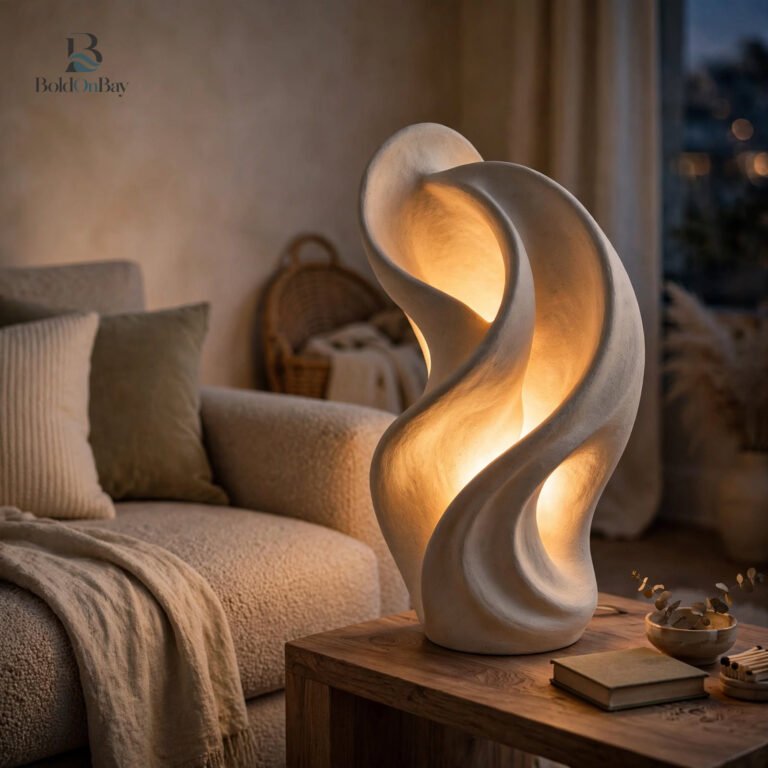
A home feels more polished when the rooms connect to each other, but that does not mean every space needs to look the same.
The best house interior ideas create a sense of flow while still allowing each room to have its own mood. Your living room can feel warm and social, your bedroom can feel softer and calmer, and your office can have more energy—all without making the house feel disconnected.
The trick is to repeat a few visual ideas throughout the home and let everything else vary.
Here are some simple ways to do that.
Repeat a Few Colors Throughout the House
You do not need one strict color palette for every room.
Instead, choose a few tones that can appear again and again in different ways.
For example, a house might use:
- warm white
- natural wood
- muted green
- soft black
- touches of rust
The living room might use green in a rug, while the bedroom uses it in artwork or bedding. Black might appear in picture frames, lamps, and hardware.
The colors do not need to match exactly.
What matters is that they repeat often enough to create a visual connection from room to room.
Let Materials Carry Through the Home
Repeating materials is one of the easiest ways to make a home feel cohesive without making it feel overly coordinated.
If you use warm wood in the living room, bring a similar tone into the dining area or bedroom.
If your kitchen has black metal fixtures, you might repeat that finish in a floor lamp, mirror, or picture frame elsewhere.
Other materials that work well across multiple rooms include:
- linen
- brass
- ceramic
- woven fibers
- stone
- glass
These small repetitions help the house feel like one continuous space rather than a collection of unrelated rooms.
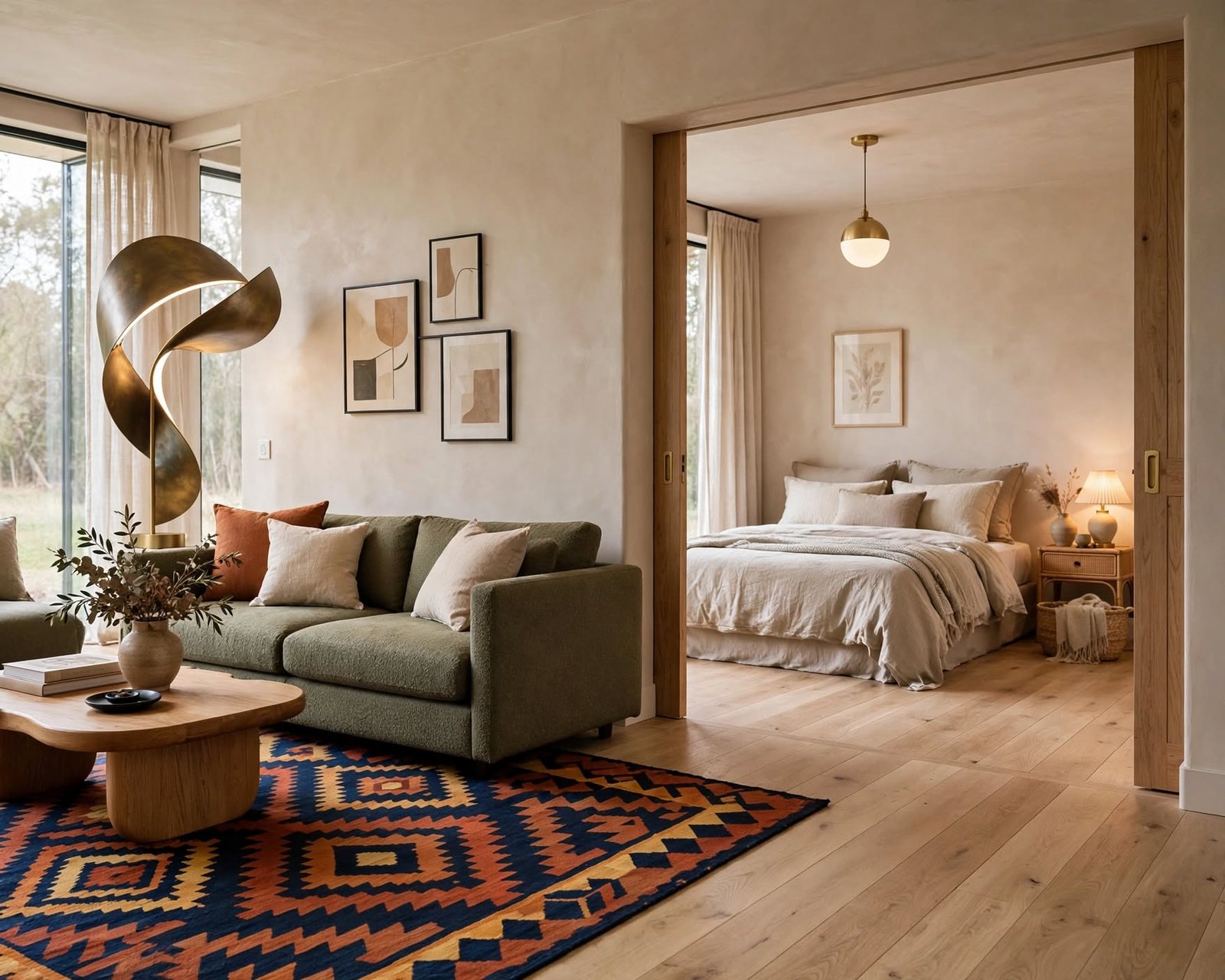
Use Artwork to Connect Different Spaces
Artwork can help tie rooms together without making them identical.
You might choose pieces that share a similar palette, style, or mood.
For example, abstract artwork in the living room could connect with a smaller print in the hallway if both use similar earthy tones.
A group of black-and-white photographs can also create continuity across several spaces.
You do not need to buy matching art.
In fact, the home usually feels more interesting when the pieces are different but still have something in common.
This is also one of the easiest areas to change over time as your style evolves.
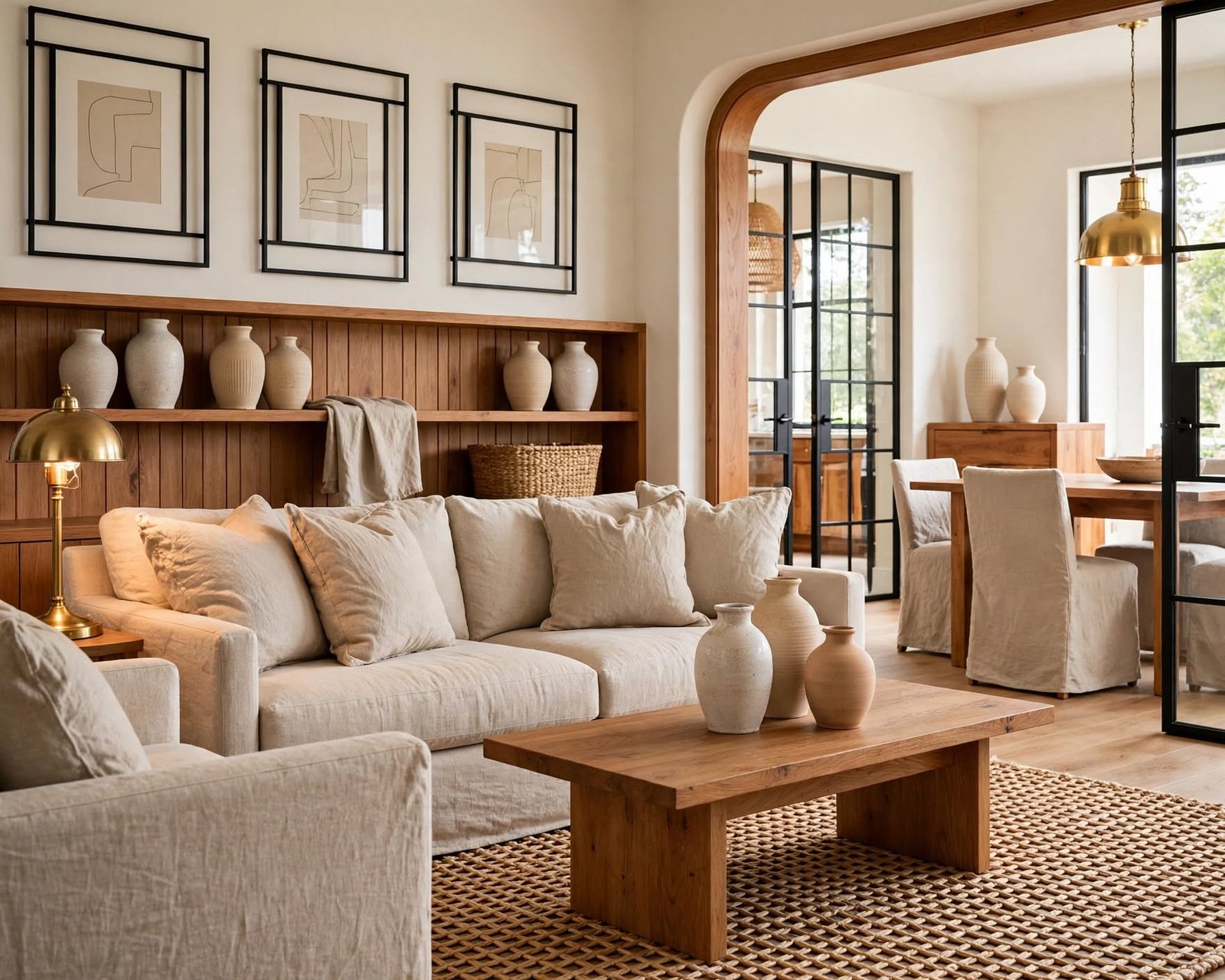
Give Each Room Its Own Personality
Cohesive does not mean repetitive.
Each room should still have a reason to feel different.
A living room might include a bold rug and sculptural lamp. A bedroom may use softer fabrics and quieter artwork. A dining room could have stronger lighting or darker colors.
What keeps the spaces connected is the repeated foundation—similar materials, colors, or finishes.
Think of the house as one collection rather than one matching set.
The rooms should feel related, but not copied.
Use Similar Shapes and Lines
Sometimes the connection between rooms comes from shape rather than color.
If your furniture has soft curves, repeat that idea in mirrors, lamps, or side tables.
If your home leans more modern, cleaner lines can carry through shelving, lighting, and furniture.
You do not need to notice these repetitions immediately.
They work quietly in the background and make the home feel more intentional.
A curved mirror in the entryway might echo a rounded coffee table in the living room or a soft-edged headboard in the bedroom.
That is enough to create continuity.
Keep the Entryway Connected to the Rest of the Home
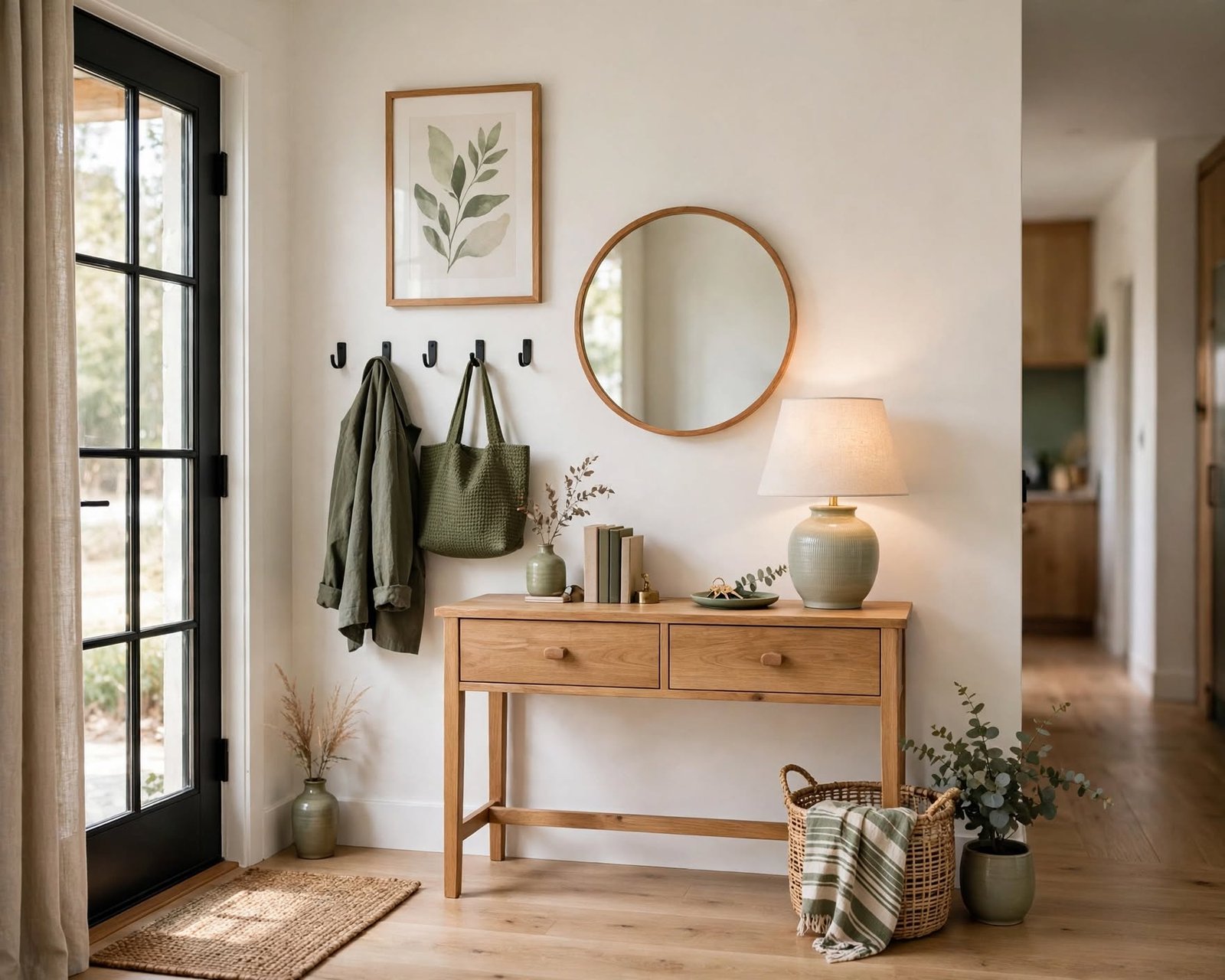
The entryway sets the tone for everything that follows.
Even a small entrance can introduce the colors, materials, and mood you use elsewhere.
A wood console, simple mirror, lamp, and piece of artwork can establish the look of the house without trying too hard.
If your living room uses warm woods and muted colors, bring a little of that same feeling into the entry.
The goal is for the first space to feel like it belongs to the rest of the home.
Repeat Lighting Finishes Instead of Matching Fixtures
Lighting does not need to be identical from room to room.
Matching every fixture can actually make a house feel too planned.
A better approach is to repeat finishes.
For example, you might use:
- black metal
- aged brass
- warm white shades
- natural woven textures
A pendant in the dining room can look completely different from a bedroom lamp while still sharing the same finish.
This gives the home consistency without sacrificing variety.
Use Rugs to Define Rooms Without Breaking the Flow
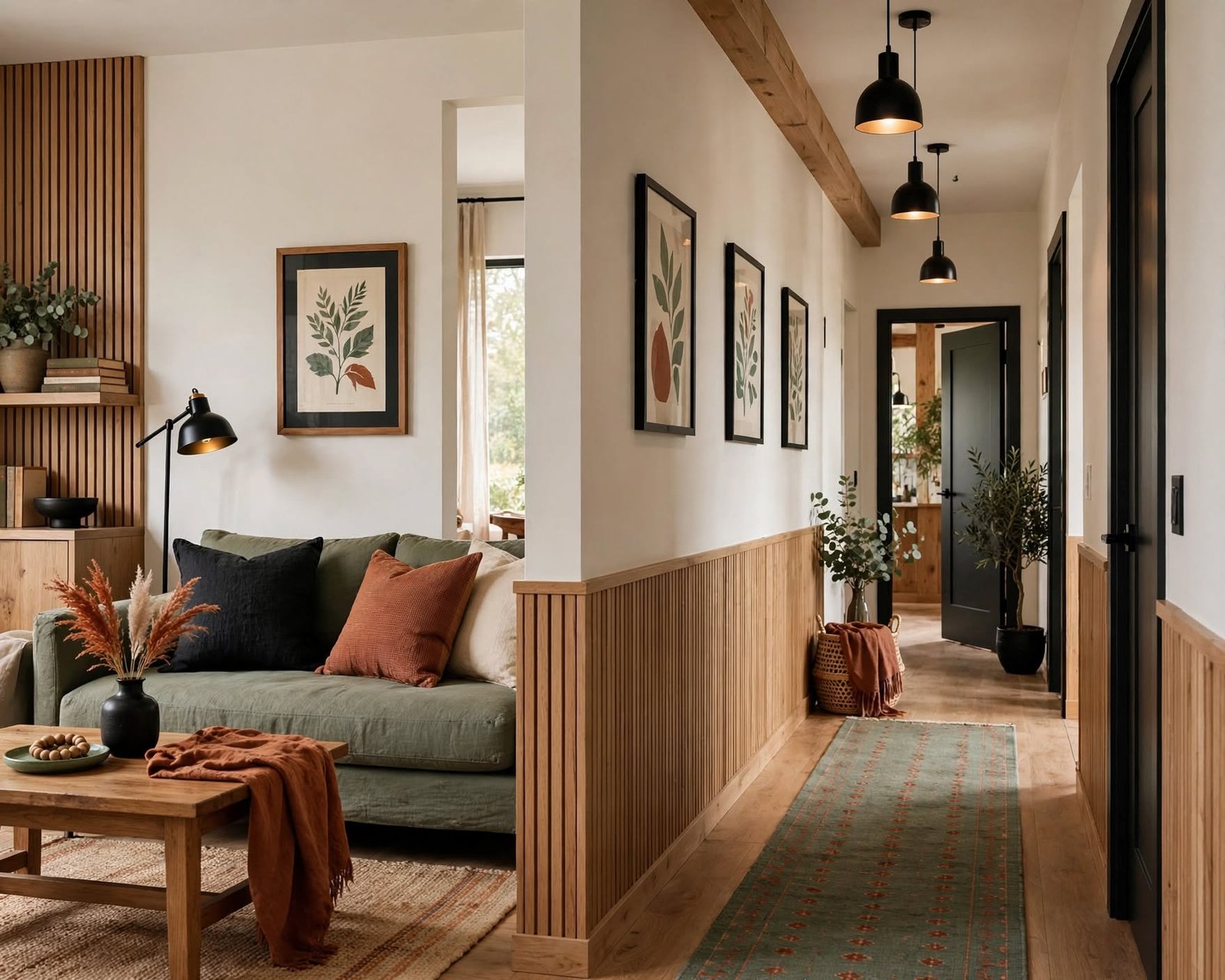
Rugs are useful for giving each space its own identity while still keeping the house connected.
The rugs do not have to match.
Look for shared colors, similar textures, or related patterns.
A neutral textured rug in the living room might pair well with a subtle patterned rug in the bedroom if both use warm beige and soft brown tones.
This works especially well in open-plan homes where you want separate zones without creating visual barriers.
Add Personal Pieces in Every Room
A cohesive home should never feel generic.
Books, artwork, photographs, collected objects, ceramics, and vintage finds give each space character.
The key is to distribute them rather than crowding everything into one room.
A favorite book stack may live in the living room. A framed photograph might sit on a bedroom dresser. A vintage bowl could work in the entryway.
These pieces make the home feel connected to you rather than just connected to a design style.
Keep Some Things Quiet
Not every room needs a statement piece.
If one space already has bold artwork, strong color, or unusual furniture, the next room can be calmer.
This contrast helps the house feel balanced.
A quieter hallway or bedroom can make a more expressive living room feel intentional rather than overwhelming.
Cohesion often comes from knowing when to repeat something—and when to stop.
Create Connection Without Making Everything Match
A good house interior does not need identical furniture, matching decor, or one strict design style.
It needs a few ideas that repeat.
Use color, materials, artwork, lighting finishes, and shape to connect the rooms. Then let each space develop its own mood.
The result should feel like one home with different chapters, not one room copied over and over.
That is usually what makes a house feel both cohesive and personal.